

01 The surplus
You have more nutrition information available to you right now than any generation before you, and there is a fair chance you still do not know what to eat today.
Search how much protein you need and you will get answers ranging from vague to oddly specific, several of them contradicting each other with total confidence. Ask five people whether carbohydrates help or hurt and you will get five different answers, most delivered as settled fact.
This is not a shortage of information. If anything it is the opposite. Nutrition science, fitness marketing, personal opinion and outright guesswork now arrive through the same feed, in the same tone, with the same production values, and very little to tell you which is which.
The result is a strange kind of confusion. Not because nothing is known, but because too much of what circulates is presented with more certainty than the evidence behind it actually supports. The question worth asking is not whether you lack information. You almost certainly do not. It is why understanding still feels so far away.
02 Where education blurs into marketing
Most of what reaches you did not start out as education. It started as a product that needed an audience, and education is one of the most effective ways to build one.
That is not an accusation that the fitness industry is lying to you. Most people making nutrition content genuinely believe what they are saying, and plenty of what circulates is accurate. The problem sits closer to the incentives underneath it. A calm, well sourced explanation of energy balance does not perform as well as a bold claim about a food you should be avoiding. Novelty holds attention. Certainty holds attention. None of that reliably makes the advice correct.
A supplement brand has a reason to tell you that food alone is not enough. A content creator has a reason to keep finding a new angle on an old topic, because the same true, boring advice does not get shared twice.
None of this requires bad faith. It only requires an information environment where what spreads and what is accurate are not reliably the same thing. Qualified professionals, researchers and public health bodies are still doing careful, evidence led work in the background. The skill you actually need is not access to more of it. It is learning to tell it apart from everything else competing for the same feed.
03 The protein obsession
Protein earned its reputation honestly. Adequate protein intake supports muscle protein synthesis, and physically active people generally need more of it than someone who is sedentary. Position stand research from the International Society of Sports Nutrition puts that requirement at roughly 1.4 to 2.0 grams per kilogram of body weight per day for most people who train regularly, well above the 0.8 grams per kilogram set as the general population baseline. (Jäger et al., 2017)
That is a real, evidence backed difference, and it explains why protein became the centre of so much fitness marketing. What it does not explain is what happened next, where one genuinely important variable turned into an entire identity. Protein content shouted from packaging. Protein added to foods that never needed it. A quiet implication that if you are not hitting an exact gram target, nothing else you are doing matters.
The research does not support that leap. The 1.4 to 2.0 gram range is wide on purpose, because individual need depends on training volume, body size, goals and how much protein is already coming from whole foods. A protein shake can be a genuinely convenient way to close a gap in a busy day. It is not a requirement, and it is not a shortcut around the rest of your diet.
The honest version of this section is short. Protein matters, more than most people who are not training realise. It is one input among several, not the single number that decides whether your nutrition is working.
04 Supplements: useful tool or expensive distraction
Ask whether supplements work and you will get a genuinely different answer depending on which supplement you mean, which is exactly the nuance most marketing skips over.
The 2018 IOC Consensus Statement on dietary supplements, written by a panel of sports nutrition researchers, put it plainly. Nutrition makes a real but modest contribution to performance, supplements can make a minor contribution to that, and of the products claiming to enhance performance directly, only a small number have good supporting evidence: caffeine, creatine, specific buffering agents and nitrate among them. (Maughan et al., 2018) Everything else marketed alongside those products sits somewhere between weak evidence and none at all.
That is not the same as saying supplements are worthless. Some genuinely help. A protein supplement can close a real gap for someone who struggles to eat enough whole food protein in a day. Creatine has one of the stronger evidence bases of any sports supplement. A multivitamin can be useful for someone whose diet is genuinely lacking somewhere. None of that requires an aisle of products each carrying a different bold claim.
The better question is not whether a supplement can work under laboratory conditions. It is whether the problem it claims to solve is actually the problem you have. Most people reaching for a fat burner do not have a fat burning problem. They have a consistency problem, an energy balance no capsule can change, or a sleep and stress picture nothing in the bottle addresses.
Ask what a supplement is actually solving before you ask whether the evidence sounds convincing. Most of the time, the honest answer points back to food, training and sleep rather than a product.
05 The problem with extreme diets
Restrictive diets tend to work in the short term and struggle in the long term, and the reason has less to do with willpower than it looks like from the outside.
A large trial comparing low carbohydrate and low fat approaches over 12 months found that the strategy chosen mattered far less than how consistently someone actually followed it, and that overall dietary quality within either approach was a stronger predictor of success than which macronutrient was restricted. (Hauser et al., 2024) Put simply, the diet that works is the one you can actually keep doing, inside your actual life, around your actual job, family and food culture.
Extreme restriction runs into a predictable set of obstacles. Social situations become harder to navigate. Travel disrupts the whole system. A single missed target starts to feel like failure rather than a normal variation in a normal week. None of that is a character flaw. It is what happens when a plan is built for a perfect week that most people do not actually have.
This does not mean structure or discipline are the problem. It means the level of restriction has to match the life it is being asked to fit inside. A nutrition approach that assumes unlimited time, energy and willpower will look excellent on paper and collapse within a month for most people trying to live around it.
06 Clean eating sounds healthy, but what does it actually mean
Ask ten people to define clean eating and you will get ten different answers, several of them contradicting each other, and that alone should tell you something about how useful the term actually is.
There is no official or agreed definition. For some people it means minimally processed food. For others it means avoiding entire categories, sugar, gluten, dairy, carbohydrates, with no individual reason beyond the label itself. What tends to survive across every version is the moral framing underneath it: some food is clean, other food is not, and eating the wrong kind is treated as saying something about you.
The World Health Organization's guidance on healthy diets does not use language like this at all. It points to a variety of minimally processed foods, adequate fruit and vegetables, and limits on free sugars and sodium, as the foundation of a healthy diet, built around adequacy, balance, moderation and diversity rather than a list of forbidden items. (World Health Organization, 2026)
A diet built mostly around whole, minimally processed foods is a genuinely strong foundation. That much of clean eating holds up. What does not hold up is the idea that food divides neatly into good and bad, or that flexibility is a failure of standards rather than a normal part of eating in the real world. The most sustainable version of clean eating, if the phrase is useful at all, looks a lot less dramatic than the content built around it: mostly whole foods, most of the time, with room for the rest of your life to still exist.

07 Calories, macros and the weight of precision
Underneath almost every nutrition approach sits the same basic principle. Energy intake needs to be roughly in balance with energy expenditure for weight to stay stable, and deliberately out of balance for it to change. The World Health Organization states this plainly as part of its core dietary guidance. (World Health Organization, 2026)
Where things get complicated is what people are told to do with that principle. Calorie counting and macro tracking are tools, and like most tools, they are useful for some people in some situations and unnecessary for others. Tracking can build genuinely useful awareness, particularly early on, when most people underestimate portions and overestimate how balanced their normal eating already is. A systematic review of dietary self-monitoring research found a consistent link between the practice and successful weight loss (Burke, Wang and Sevick, 2011), and a later study found that people who logged their food more frequently through an app lost significantly more weight than those who logged only occasionally. (Harvey et al., 2019)
None of that means every person needs to weigh every meal indefinitely. For someone with a stable routine and a reasonable instinct for portions, that level of precision can add stress without adding much useful information. For someone starting out, or trying to understand a stalled result, a short period of honest tracking is often the fastest way to see what is actually happening.
Treating precision as a permanent requirement is where this tool becomes a problem. The goal of tracking is to build understanding you eventually carry without the app, not to create a habit you have to maintain forever to trust your own eating.
08 Foundation before optimisation
Most people trying to improve their nutrition start in the wrong place. They start with optimisation, the exact protein timing, the ideal pre workout meal, the ranked list of best fat loss foods, before the basics underneath any of that are actually in place.
Foundation, then consistency, then individualisation, then optimisation, then supplementation where it is genuinely needed. Almost everything marketed to you sits at the bottom of that order.
- Adequate energyEnough total food for your goal, before anything else is worth adjusting.
- Appropriate proteinRoughly matched to your training and body size, from food first and supplements where useful.
- Carbohydrate, fat, fruit and vegetablesBuilt around how you train, feel and recover, not around fear of any one nutrient.
- Fibre and hydrationUnglamorous, and consistently underrated.
- Consistency and sustainabilityHeld for months, not perfected for a single week.
- IndividualisationAdjusted to fit your life, your food and your schedule specifically.
- Optimisation and supplementationThe smaller variables, addressed once everything above is genuinely solid, and only where there is a specific reason to.
The fitness industry, not always deliberately, tends to sell the bottom of that list first, because the bottom is more novel, more visible and considerably easier to package as a product. None of the discipline further up is glamorous. Eating enough, eating reasonably consistently, and doing that for long enough to see it work will outperform a perfectly optimised week that only happens once.
09 Why one plan cannot work for everyone
The most confident nutrition content on any platform tends to be the most generic, and those two things are connected. A specific plan for a specific person is harder to write, harder to sell at scale and considerably less shareable than a rule that claims to work for everyone.
Age, training history, body size, goals, food preferences, culture, budget, schedule and any relevant medical considerations all shape what a workable approach actually looks like for one person. A plan built around three home cooked meals a day assumes a kitchen, time and a routine that not everyone has. A plan built around several small meals assumes a schedule that suits almost nobody working shifts or raising young children.
This is not an argument against structure or guidance. It is an argument for guidance that starts with the person rather than the content format. The same underlying principles, enough energy, enough protein, mostly whole foods, consistency over time, apply broadly. How they get applied changes completely depending on who is applying them and what their actual week looks like.
We are not able to offer medical treatment or diagnose anything through an article, and nutrition guidance that touches a genuine medical condition should always sit alongside advice from a qualified healthcare professional. What we can say plainly is that a single plan handed to everyone is, at best, a reasonable starting point for nobody in particular.
10 What the fitness industry should be teaching instead
If the goal is genuinely to help people eat and train well, the priority list looks different to the one most content actually optimises for.
Better nutrition education would spend less time on novelty and more on context, helping people understand why a recommendation exists rather than simply what it is. It would teach a basic kind of evidence literacy, the ability to tell a well supported claim from a merely confident one, since those two things are not the same and rarely announce which is which. It would set realistic expectations rather than timelines built for the best possible case. It would treat individualisation as the standard rather than a premium feature, and transparency as normal rather than a selling point.
Most of all, it would aim for independence rather than dependency. A good nutrition approach should make you need less guidance over time, not more, as you build the understanding to make sound decisions on your own.
11 So, does the industry want you confused
Coming back to the question this article opened with, the honest answer is not a clean yes or no.
There are genuine parts of the fitness and nutrition ecosystem where the incentives reward novelty, complexity and constant reinvention, because that is what keeps attention and keeps products moving. Nobody built those incentives to confuse people deliberately. They built them to compete for attention, and confusion turned out to be a reliable byproduct.
There are also, inside that same ecosystem, researchers, dietitians, coaches and public health bodies doing careful, evidence led work that rarely goes far because it is calm rather than dramatic. Both of these things are true of fitness nutrition at the same time, which is part of why it is so hard to navigate from the outside.
The skill worth building is not memorising more facts. It is learning to ask, of any claim that reaches you, what the actual evidence behind it is, and who benefits if you believe it. That question, applied consistently, filters out most of the noise without requiring you to become a nutrition scientist yourself.

12 The bottom line
You probably do not need another extreme diet, another supplement stack, or a level of macro precision that makes eating stressful. Most people looking to improve their nutrition need less novelty, not more.
What tends to actually work is unglamorous. Enough food, mostly whole, protein roughly matched to how much you train, consistency held over months rather than days, and a plan built around the week you actually have rather than the one you wish you had.
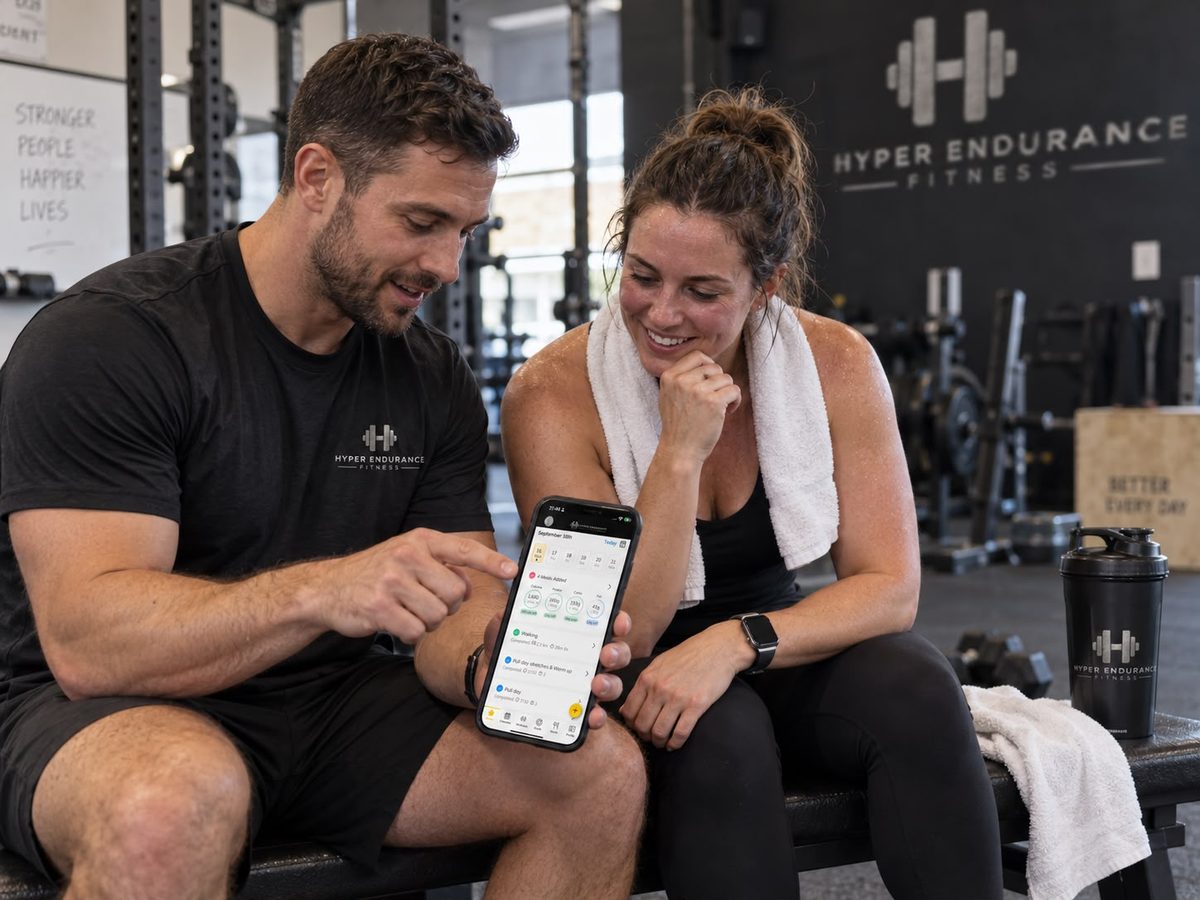
This is the thinking behind Fuel, the nutrition discipline inside our coaching. Guidance built around how you already eat, rather than a diet imposed on top of your life, delivered through the same coaching relationship as your training, progress and support inside the Hyper Endurance Fitness App.
Nutrition is meant to support your training, your recovery and your life, not become another source of pressure sitting on top of it. Understanding does not require complexity. It requires the fundamentals, held consistently, for long enough to matter.
The short version
- Confusion around nutrition is rarely caused by too little information. It is caused by too much of it arriving with more certainty than the evidence supports.
- Protein, supplements and macro tracking are each useful tools within a real evidence base, not a complete strategy on their own.
- Consistency and adherence predict success more reliably than which specific diet or macro split you choose.
- A workable nutrition approach starts with the fundamentals and the person, then adds precision and supplementation only where there is a genuine reason to.
13 Sources
World Health Organization. (2026). Healthy diet. Read the fact sheet
Jäger, R., Kerksick, C. M., Campbell, B. I., Cribb, P. J., Wells, S. D., Skwiat, T. M., Purpura, M., Ziegenfuss, T. N., Ferrando, A. A., Arent, S. M., Smith-Ryan, A. E., Stout, J. R., Arciero, P. J., Ormsbee, M. J., Taylor, L. W., Wilborn, C. D., Kalman, D. S., Kreider, R. B., Willoughby, D. S., Hoffman, J. R., Krzykowski, J. L., and Antonio, J. (2017). International Society of Sports Nutrition Position Stand: protein and exercise. Journal of the International Society of Sports Nutrition, 14, 20. Read the study
Maughan, R. J., Burke, L. M., Dvorak, J., Larson-Meyer, D. E., Peeling, P., Phillips, S. M., Rawson, E. S., Walsh, N. P., Garthe, I., Geyer, H., Meeusen, R., van Loon, L. J. C., Shirreffs, S. M., Spriet, L. L., Stuart, M., Vernec, A., Currell, K., Ali, V. M., Budgett, R. G. M., Ljungqvist, A., Mountjoy, M., Pitsiladis, Y., Soligard, T., Erdener, U., and Engebretsen, L. (2018). IOC consensus statement: dietary supplements and the high performance athlete. British Journal of Sports Medicine, 52(7), 439 to 455. Read the study
Hauser, M. E., Hartle, J. C., Landry, M. J., Fielding-Singh, P., Shih, C. W., Qin, F., Rigdon, J., and Gardner, C. D. (2024). Association of dietary adherence and dietary quality with weight loss success among those following low carbohydrate and low fat diets: a secondary analysis of the DIETFITS randomized clinical trial. American Journal of Clinical Nutrition, 119(1), 174 to 184. Read the study
Burke, L. E., Wang, J., and Sevick, M. A. (2011). Self monitoring in weight loss: a systematic review of the literature. Journal of the American Dietetic Association, 111(1), 92 to 102. Read the study
Harvey, J., Krukowski, R., Priest, J., and West, D. (2019). Log often, lose more: electronic dietary self-monitoring for weight loss. Obesity, 27(3), 380 to 384. Read the study
This article is educational information, not medical, dietetic or personal training advice. If you have a health condition, or you are unsure whether an approach suits you, speak to a qualified healthcare professional first.
If working out what actually matters feels like the hard part
Fuel is our nutrition discipline: guidance built around how you already eat, delivered inside the same coaching relationship as your training, progress tracking and support, all inside the Hyper Endurance Fitness App.
Memberships from 54.99 EUR every 28 days. Fourteen days to cancel for any reason.